SPLENDER, A Silica Dispersing Agent from KAO Corporation, Japan
Introduction: The Role of Silica in Rubber Compounds
Silica plays a vital role in modern rubber formulations, especially in the tire industry, by improving rolling resistance, wet traction and meeting strict environmental standards. Unlike carbon black, it lowers energy loss, boosting fuel efficiency and reducing CO₂ emissions. Silica also enhances wet grip for better safety. When combined with silane coupling agents, it bonds effectively with non-polar rubbers. Its white colour further allows for coloured and non-marking rubber products, making it valuable in both automotive and non-automotive applications.
Challenges in Dispersing Silica into the Rubber Matrix
Industries face several challenges when incorporating silica into rubber matrices:
- Poor Compatibility: Silica’s polar surface (silanol groups) has low affinity with non-polar rubbers such as NR, SBR, and BR.
- High Viscosity: The inclusion of silica increases compound viscosity, complicating mixing and processing.
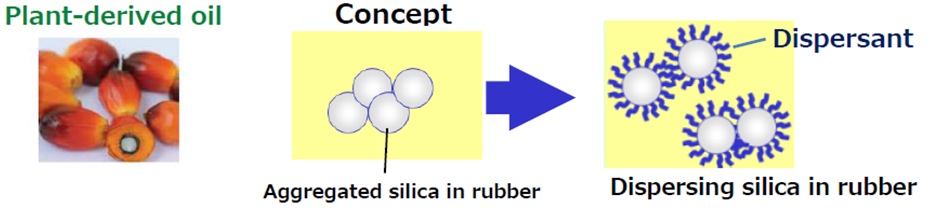
- Agglomeration: Silica tends to form hard clusters, leading to poor dispersion and uneven properties.
- Moisture Sensitivity: Silica absorbs moisture, which can interfere with silane coupling reactions.
- Complex Mixing Process: Achieving uniform dispersion requires multi-stage mixing and precise temperature control to activate silane.
- Scorch Risk: Improper mixing can cause premature vulcanization (scorching) due to the heat generated from silane reactions.
Current Industry Solutions for Dispersion Issues
- Silane Coupling Agents: Using agents like TESPT to enhance compatibility between silica and non-polar rubbers.
- Advanced Mixing Equipment: Utilizing internal mixers with precise temperature and rotor control for effective silica breakdown and silane activation.
- Pre-Treated Silica: Employing hydrophobized silica to reduce moisture absorption and improve dispersion.
- Process Aids: Adding fatty acids and plasticizers to lower compound viscosity and enhance silica distribution.
- Quality Control Tools: Employing real-time monitoring tools like RPA and Mooney viscometers to ensure consistent dispersion and performance.
Implementation of SPLENDER in Rubber Formulation
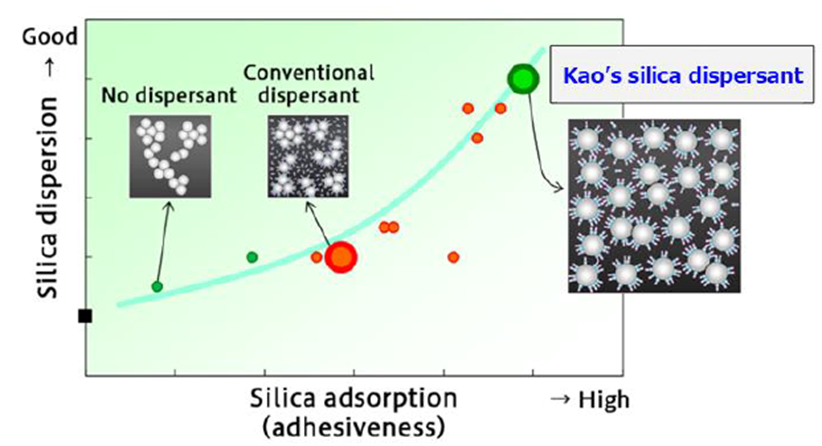
SPLENDER R-2000 & R-3000 is a specially engineered silica dispersant developed by KAO Corporation, Japan, to address the persistent issue of inefficient silica dispersion in rubber compounds. As a breakthrough solution, R-2000 significantly enhances the performance of silica-filled rubber systems by ensuring even filler distribution, reducing viscosity, and improving mechanical properties.
Unique Advantages of SPLENDER
- Superior Silica Dispersion: Ensures even filler distribution, resulting in lower compound viscosity and improved homogeneity.
- Reduced Mixing Time: Facilitates faster incorporation of silica, reducing overall mixing time.
- Enhanced Processability: Promotes smoother mixing, better flow, and consistent compound quality.
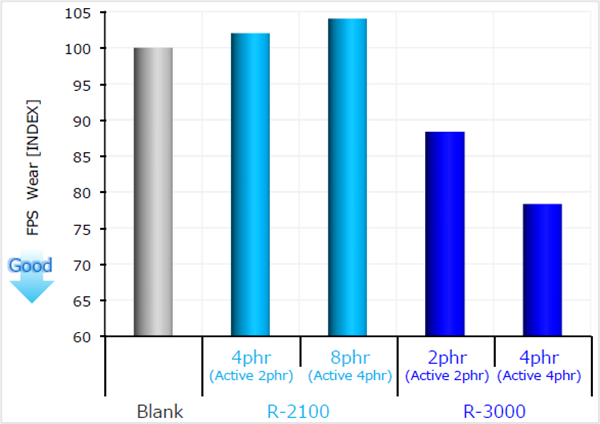
- Outstanding Abrasion Resistance: Reduces abrasion loss, making it suitable for high-durability applications like tires and industrial components.
- Improved Mechanical Properties: Achieves higher rebound resilience, lower heat build-up, and superior tensile strength.
- Broad Compatibility: Compatible with both sulfur and peroxide curing systems, adaptable across various elastomers.
Recommended Applications
- Tire Manufacturing
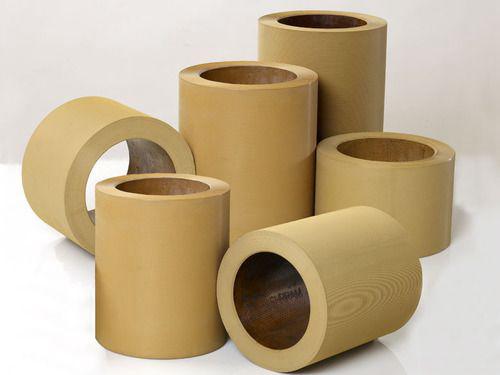
- Rubber Roller Compounds
- Footwear
- Industrial Rubber Goods, Hoses, and Belts
- Seals and Gaskets
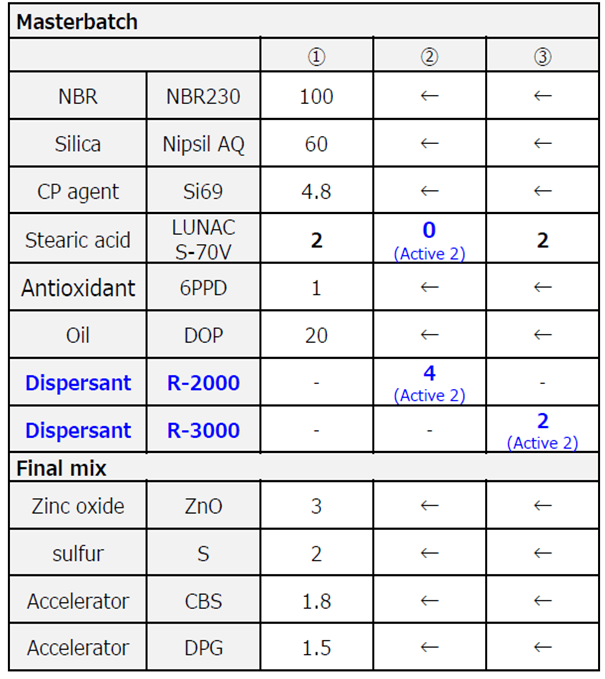
Test Formulation
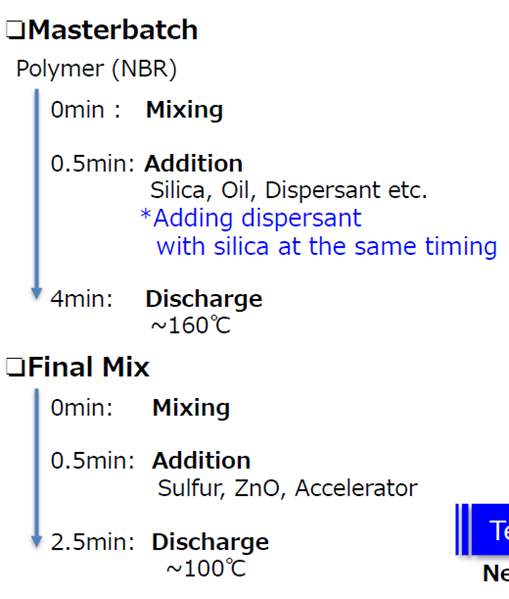
Mixing Sequence
Mooney Viscosity
tanδ
Wear Performance
Formulation with R-2000:
Recommended Formulation
| Blank | 1 | 2 | 3 | 4 | 5 | |
| Silica | ? | +5 | +5 | +10 | +10 | +10 |
| R-2000 | 0 | +4 (act.2) | +4 (act.2) | +4 (act.2) | +4 (act.2) | +4 (act.2) |
| Stearic Acid | ? | -2 | -2 | -2 | -2 | -2 |
| Sulfur | ? | – | 90% | – | 90% | 80% |
| Sulfurization Accelerator | ? | – | 90% | – | 90% | 80% |
Example (Phr)
| Blank | 1 | 2 | 3 | 4 | 5 | |
| Silica | 75 | 80 | 80 | 85 | 85 | 85 |
| R-2000 | 0 | 4 (act.2) | 4 (act.2) | 4 (act.2) | 4 (act.2) | 4 (act.2) |
| Stearic Acid | 2 | 0 (act.2) | 0 (act.2) | 0 (act.2) | 0 (act.2) | 0 (act.2) |
| Sulfur | 1.5 | 1.5 | 1.35 | 1.5 | 1.35 | 1.2 |
| Sulfurization Accelerator | 1 | 1 | 0.9 | 1 | 0.9 | 0.8 |
Formulation with R-3000:
Recommended Formulation
| Blank | 1 | 2 | 3 | 4 | 5 | |
| Silica | ? | +5 | +5 | +10 | +10 | +10 |
| R-3000 | 0 | +2 | +2 | +2 | +2 | +2 |
| Stearic Acid | ? | – | – | – | – | – |
| Sulfur | ? | – | 90% | – | 90% | 80% |
| Sulfurization Accelerator | ? | – | 90% | – | 90% | 80% |
*If vulcanization is excessive and leads to a decline in material properties,
it is recommended to reduce the amount of sulfur and accelerator.
Example (Phr)
| Blank | 1 | 2 | 3 | 4 | 5 | |
| Silica | 75 | 80 | 80 | 85 | 85 | 85 |
| R-3000 | 0 | 2 | 2 | 2 | 2 | 2 |
| Stearic Acid | 2 | 2 | 2 | 2 | 2 | 2 |
| Sulfur | 1.5 | 1.5 | 1.35 | 1.5 | 1.35 | 1.2 |
| Sulfurization Accelerator | 1 | 1 | 0.9 | 1 | 0.9 | 0.8 |